

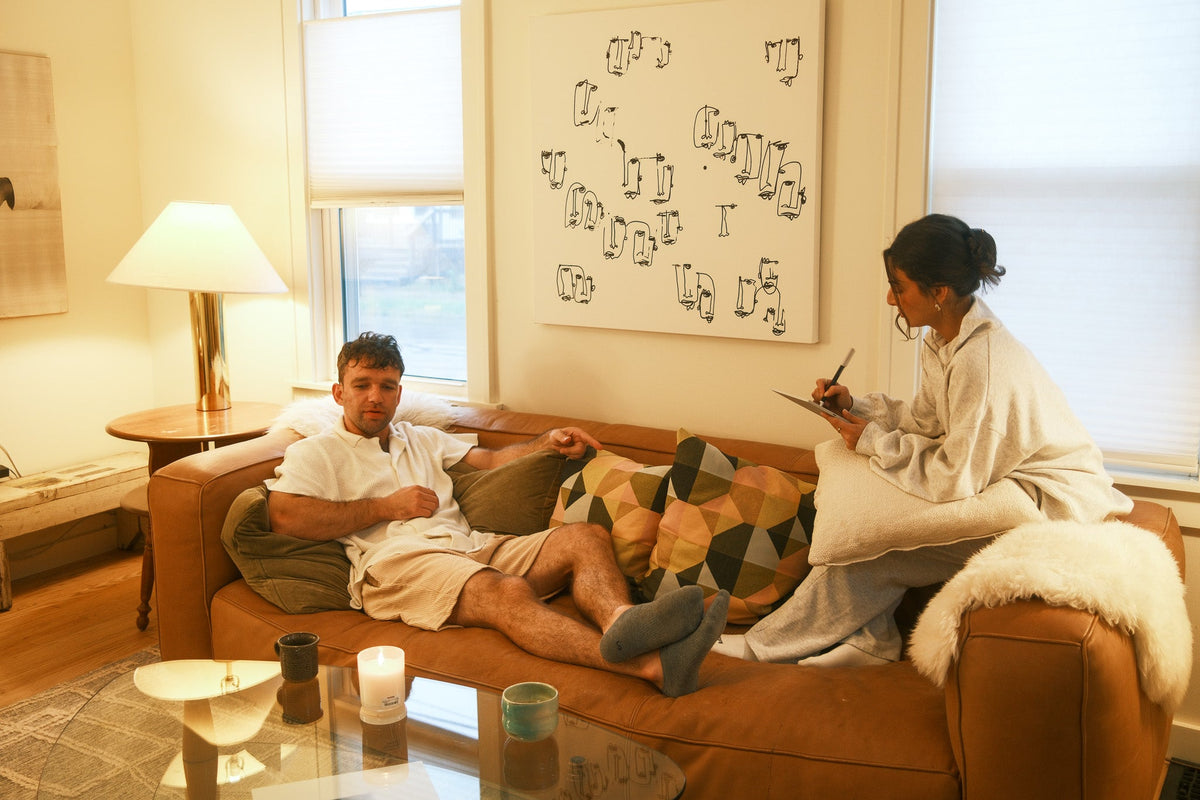
Fall tends to be the season that says “get your life together.”
Summer calendars give way to meetings, school schedules, Q4 deadlines, year-end plans, and the holidays. Your natural response is probably to get organized. But “getting organized” is often a synonym for adding something: a new app, a new system, a new productivity method.
However, a reset doesn’t have to mean adding more.
Digital minimalism offers a different approach. Instead of rejecting technology or trying to live without screens, it’s about being more deliberate about which tools deserve your attention, when you use them, and what you actually need them to do.
As life gets busier this fall, consider removing some of the noise before you add anything new.
Audit What Deserves Your Attention
Attention gets spent whether you intend to spend it or not.
Start by looking at what regularly asks for yours: notifications, emails, group chats, recurring meetings, apps, subscriptions, news alerts. Do each of these need the level of access to your attention that you’ve given it?
For example, your group chat can matter without being allowed to interrupt every meeting. You don’t need to delete everything. Just make things earn their interruptions.
Create Boundaries Around Communication
The ability to reach someone instantly creates an expectation that they should respond instantly. You don’t have to accept that arrangement.
Try creating periods when communication waits. Put your phone on Do Not Disturb while you’re working. Close Slack when you need to work through something. Check email at intentional intervals instead of keeping it open all day.
The goal here isn’t to become unreachable, but rather recognize that not every message requires immediate access to you.
The people who need you will still be there in an hour. So will your emails (probably all of them, unfortunately).
Give Yourself Space to Think
Doing all your thinking on connected devices creates a problem: The place where you’re trying to think is also the place where everyone else can reach you.
You open your laptop to outline a project, then an email arrives. You pick up your phone to make a note, then you get a text.
One solution is to create places where thinking and reacting are separate activities. That might mean planning your day before opening your laptop, taking meeting notes somewhere other than your phone, or working through an idea without another inbox sitting one click away.
It’s impossible to eliminate every distraction, but it helps to stop inviting them into the room.
Simplify Your Tech Stack
Busy seasons can make new productivity “hacks” look enticing.
Before downloading another one, look at what you already use.
Which tools make your life easier? Which ones duplicate something another tool already does? Which require too much managing?
Digital minimalism is about being intentional with the tools you choose to keep. If a calendar, notes app, and to-do list already work, you probably don’t need a comprehensive life-management dashboard.
Bring Back Analog Moments
Not everything needs an interface.
Read a physical book. Make a grocery list by hand. Take a walk without tracking it. Sketch something badly.
There’s nothing inherently virtuous about doing something offline. Sometimes analog is simply the more pleasant or practical tool for the job.
Writing is a good example. A page gives you room to scribble, cross things out, and work through half-formed thoughts without deciding where everything belongs first.
Decide What Actually Needs to Be Digital
You don’t have to commit to going fully analog or fully digital. Instead, think about which part of an activity benefits from each.
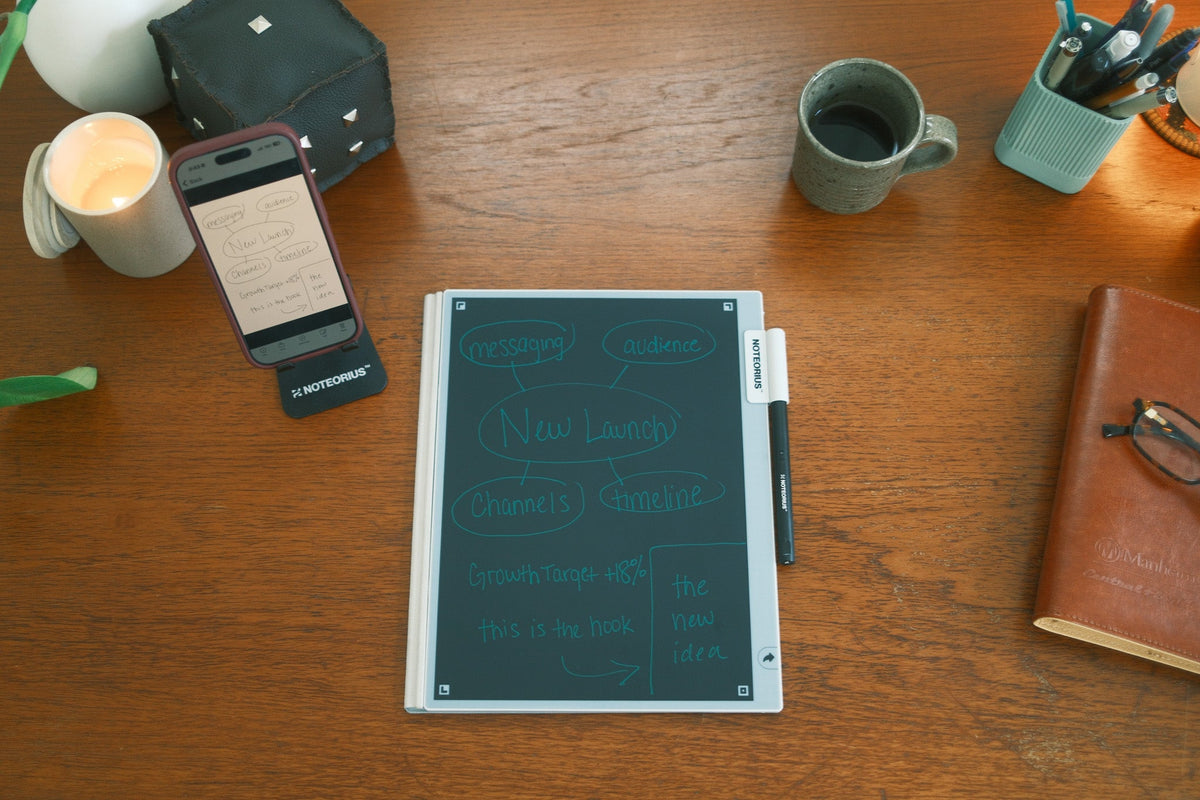
For example, taking notes by hand may feel more natural, while having them stored digitally makes them easier to organize. The writing doesn’t need a screen just because the storage benefits from one.
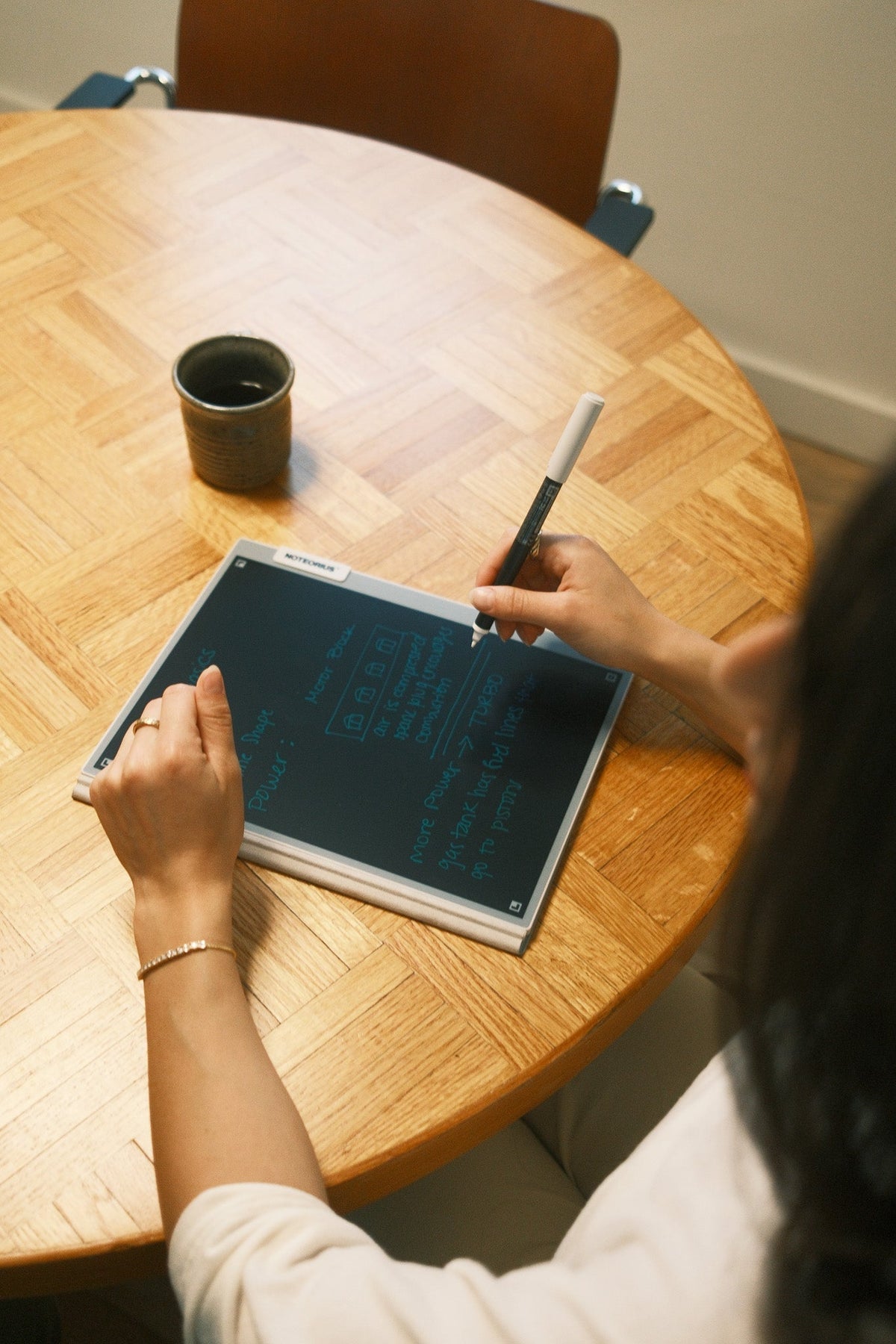
That idea is central to how we designed Noteorius. You can use it to jot something down, make a list, sketch an idea, or take notes without opening another connected device. Then you can save the page digitally when you’re finished.
That’s a helpful way to think about a fall reset more broadly. You probably don’t need to overhaul your life or build some elaborate system before Q4. Look at what’s competing for your attention. Keep what helps. Put some boundaries around what doesn’t.
And give yourself a little more room to think.
Share:
The Digital Minimalist’s Guide to Taking Notes