

There’s a familiar problem with taking notes on your phone.
You open an app to write down an idea. Before you get there, you see a text. Then an email notification. Maybe you remember there was something else you wanted to look up. Five minutes later, you’re doing something completely unrelated to the reason you picked up your phone.
It’s tempting to think of this as a failure of discipline. In reality, it’s the result of using a general-purpose device for a specific task.
A smartphone or tablet is an impressive place to store notes, but it’s not always a great place to have the thoughts that produce them. That’s an important distinction if you’re interested in digital minimalism. The goal here isn’t to reject technology, but become more deliberate about where technology belongs.
Note-taking offers a useful case study.
What Is Digital Minimalism?
Digital minimalism is about deciding which technologies add meaningful value to your life and eliminating much of the digital noise that doesn’t.
Cal Newport, who coined the term, describes digital minimalism as an intentional process of clearing away low-value digital noise while optimizing the technologies that provide significant value.
In other words, the minimalist doesn’t ask, “Is this technology useful?”
A better question is, “Is this the best way to accomplish something that matters to me?” This distinction is central to digital minimalism: a tool offering some value isn’t enough reason to give it your time and attention.
Apply this test to note-taking and things get interesting.
Why Note-Taking Has Become So Distracting
For most of human history, writing something down was a single-purpose activity.
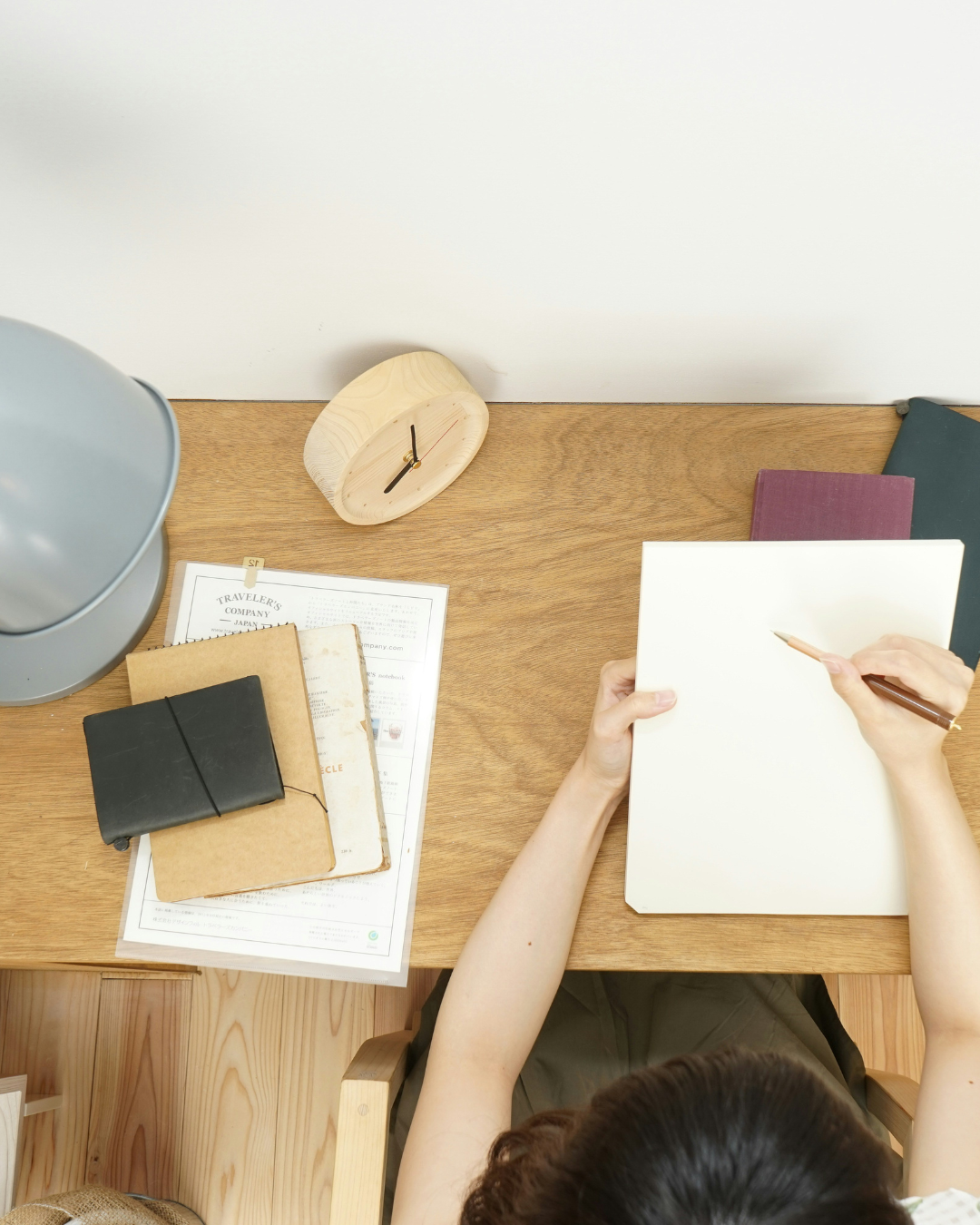
You picked up a pen and wrote.
Today, we often take notes on devices that can simultaneously receive emails, play videos, browse the internet, check the stock market, and order lunch. This creates a mismatch.
Taking notes requires attention. The devices we use to take them are designed to offer countless opportunities to redirect that attention.
Another problem is that we treat capturing a thought and managing information as though they must happen in the same place.
A chef prepares food in a kitchen and stores it in a refrigerator. We don’t consider this inefficient because the kitchen and refrigerator perform different jobs well.
Note-taking can work the same way. The best environment for thinking doesn’t necessarily have to be the best environment for storing, searching, sharing, and organizing those thoughts.
Is Pen and Paper Better for Digital Minimalism?.
For a digital minimalist, using a pen and paper is valuable because attention is scarce. Newport argues that attention is both finite and fragile, which makes tools that constantly compete for it particularly costly.
That said, paper introduces a different kind of friction.
If you fill enough notebooks, you eventually have to remember which notebook contains the thing you need. Sharing a page means photographing or scanning it. Getting handwritten notes into a digital workflow often means typing them again. When one notebook fills up, you buy another.
Paper is therefore excellent at capturing thoughts, but less effective at managing them.
What Should a Digital Minimalist Note-Taking System Look Like?
A minimalist system should first be easy to ignore. When you’re actually writing, the tool itself should occupy as little of your attention as possible.
Second, it should reduce the number of places where information lives. If meeting notes are scattered among three notebooks, Apple Notes, screenshots, Slack messages, and a pile of Post-its, you’ve built a scavenger hunt rather than a system.
Third, capturing information shouldn’t depend on being connected. An idea that occurs on a plane, during a meeting, or while your phone is in another room should be just as easy to record.
Finally, the system shouldn’t create unnecessary work downstream. If writing something by hand requires photographing, scanning, uploading, and filing it later, the supposed simplicity of paper generates its own burden.
The Analog-Digital Approach to Taking Notes
This leads to a useful middle ground: analog input with digital storage. You write by hand when you’re thinking, then technology handles what happens after.
This is the idea behind Noteorius, a reusable digital notebook built around three components:
-
A notepad where you think
-
A pen that captures your writing
-
An app where your notes live
There’s no need to open an app before you start writing. The writing surface has no feeds or notifications competing for your attention.
When you finish a page, you tap the arrow with the pen to save it. You can then clear the reusable writing surface and start another page.
The result is a separation between thinking and administration.
How Noteorius Fits a Digital Minimalist Workflow
The most interesting thing about Noteorius from a digital minimalist perspective is where the technology lives. The writing surface stays simple. You don’t need your phone nearby to use it, either. The pen captures what you write and stores it until your phone comes back into range.
The digital functionality becomes useful after you’ve finished thinking.
From there, your pages appear in the free Noteorius app, where you can revisit, organize, share, or export them. Notes can also be sent to Google Drive, OneNote, Evernote, or Dropbox.
There’s no subscription required for the app, sync, or cloud export.
This architecture reflects a useful digital minimalist principle: technology should appear at the point where it provides value, not simply because it can.
How to Start Taking Notes Like a Digital Minimalist
You don’t need to replace your entire productivity system to make note-taking less distracting. Here are some tips:
-
When you’re brainstorming, journaling, planning, or taking meeting notes, focus only on getting ideas down. Resist the urge to simultaneously categorize, format, share, and organize them.
-
Give yourself one primary place to capture handwritten ideas instead of distributing them among whatever notebook or device happens to be closest.
-
Keep your phone physically away from you during periods that require concentration. Turning off notifications helps. Putting the device somewhere you cannot reflexively reach for it helps more.
-
process your notes at deliberate times. Review what you’ve written, organize what matters, export what needs to go elsewhere, and discard what doesn’t.
The objective here is to spend less time managing a system and more time thinking.
Less Screen. More Thought.
Digital minimalism is sometimes mistaken for nostalgia: throw away the smartphone, buy a paper planner, and pretend the internet never happened. That misses the point.
The philosophy is based on recognizing that digital technology can provide value while also acknowledging that more technology isn’t automatically better.
Sometimes the most useful role technology can play is handling everything around the thinking—then getting out of the way while the thinking actually happens.

Share:
Beyond Busy: A Practical Guide to the Science of ‘Deep Work’